Friday, 27 January 2017

Evaluation of Psychoanalytical Film


After looking at three different psychoanalytical theories in film; Freud's theory of self, Lacan's mirror stage and 'Lack' theory, and Mulvey's Male Gaze, I decided to make a short film as my final product of the unit. I chose to focus on Lacan's theory of 'Lack' and tried to portray this in a way that I thought many young people could find relatable. Although my focus was on the theory of 'lack', Freud's theory of self is also displayed in my film with the media representing the ‘id’, the girl being the ‘ego’ and the presence of her parents being the ‘superego’.

In my film I wanted to show a personal lack of what my character believe to be the normal life for a teenager, through watching TV shows like Skins, due to authoritative parents holding her back from being able to live how she wishes. There's no dialogue to imply she feels isolated from everything and everyone around her because of the way her parents are towards her.
I used the panning shot of the living room near the start of the film to show the type of life the character is having to live; it acts similarly to an establishing shot as it shows the environment and setting that this girls life is taking place. The fading overlap used while the girl is reading was done to show that her life is just happening, that she isn’t living it the way she wants to. It also gives the impression that when she is at home time just passes her by her without her noticing due to the absence of her parents and a ‘normal’ life.
Showing the close up of the note left by her parents makes it the only thing in shot making it the only focus point grabbing the attention of the audience; the jump to a closer shot highlights the strictness of the parents and how little control the girl has over her own life. Showing this shows the parents as a ‘superego’ type presence without being present, as they are trying to keep her on track while they aren’t around to keep her morally stable in their eyes and society’s.
I later use the note as a layer on top of another shot, a shot of the TV show ‘Skins’. I edited the opacity to show that as the girl watches shows like Skins and is exposed to this lifestyle the importance of living to her parents’ rules is slowing slipping from being a priority but also the fades and crossovers of the titles of Skins and a note left by the mum show that the two thoughts are crossing in her mind, whether to be who she wants and live her life how she wants or whether she wants to keep her mum happy and follow her rules. I decided that the use of a show like ‘Skins’ follows along with Freud’s theory of the self, as the show portrays the ‘id’ as it causes her to rebel and act somewhat childish by breaking the rules her parents set to keep her safe and on track.
The close ups of the phone that show a text from 'mum' show that although the parents aren't present at that moment in time they have a very strong hold on the girl and what she does. The close up indicates that it's an significant factor in the girls life, the messages her mum sends dictates the girls life without the mum herself being around, she has that much power and indoctrinated the girls mind with the her own ideals without taking her daughters preferences into consideration. The shots of the girl texting her mum I put between shots of her leaving bedrooms and the person in them and followed with a shot of her in bed clutching onto a bottle of wine with other alcohol and cigarettes etc over the bed and floor. I altered the speed of her replying to give the feeling that the girl is now used to having to text her mum the same sort of thing and that she isn’t bothered by lying to her mum.
The shots of the girl in bed with someone are the start of her rebelling and trying to gain the life she feels she's missing, I edited the texting in between each bed scene to show that she is starting rebel by not just sleeping with different people but lying to her parents as well about trusting her. The shot of the note flashing up on the fridge shows how controlling her parents are without even being present. I chose to put it there in the film because even though she’s going against what her parents expect of her their still in the back of her mind trying to keep her morally balanced.
I also used close ups when she is stood in the street smoking so that the concentration is solely on that she is smoking, which in the lifestyle her parents have her living isn't accepted so the close up makes it the focus of the shot.
I ended the film with the girl sneaking out and leaving it with an open ending on what happens after she sneaks out, the ending is left for viewer interpretation.

I feel that there are parts I would change or would have done differently, such as the when the girl is in the bed, I had intended to do a montage of her in a load of different beds with loads of different people to fully portray the idea of her sleeping around and rebelling against her lifestyle, however due to location restrictions and the lack of people willing to take part I had to change my idea and decided to do as her in two room, one obviously a male room and one a female room with the texting between them. I would feel that in places my editing could be better as I noticed that certain parts aren’t as clean as I would hope, like when the girl is texting and it swaps between the texting and her in the bedrooms, I would have liked that to be neater. However I like the part where I have reversed the opening shot and followed it with the original later in the film because I think it adds to the idea that her life is very plain and repetitive without much excitement when at home as it is a repeated shot.
 

Psychoanalytical Film

Monday, 16 January 2017

Cutting to Music - Four Hour Film Challenge


This is my first attempt of cutting and editing to music. This was done as a four hour film challenge; to find footage, song and edit it all and be done within a four hour time frame. I found this particular challenge a great chance to experiment with Premiere Pro and the different features I could use when it comes to the music video unit later on in the course.

Saturday, 14 January 2017

4 Hour Film Challenge


I used an instrumental cover of wRoNg by ZAYN. The brief was to cut footage to music. The footage used was found on the internet or files I already had saved; I edited it all together to match the beats in the music which will be helpful when editing the music video in the later unit.

Friday, 16 December 2016

The Male Gaze in Chicago


The Male Gaze, is the idea that the female character(s) are purely in the scene as an erotic object for the male characters and male audience. They're are there to be looked at, that is their meaning in the scene/film.


The Cell Block Tango scene from Chicago is a prime example of the male gaze in film. In the scene the girls are dancing around in lingerie in Tango style, a style seen as being sensual, passionate and intimate. The male gaze is prominent throughout this scene, and this is shown by the intense focus on the female body and the way it moves during the tango style dance routine and the close ups on the dancers' legs; also the costumes used in the scene also scream male gaze as they're all dressed in lingerie and heel showing off their physique of the girls, making them an erotic object to the male viewer.

The types of shots used in this scene show the camera as a male with desires towards the women; the long shots show the whole body of the females with them dancing around in the lingerie style costumes which strongly implies the desires towards the females that, in Mulvey's theory, are only a part of the scene to be erotic objects for characters in the scene and the audience.
The close ups do a similar thing, but instead they set the focus in a particular area, for example theres a close up shot on one of the dancers crotch with while rising one foot through the instep drawing all attention to her crotch defining her as a erotic object for males either in the film or in the audience. 
The lighting also helps apply Mulvey's theory, the shot when the spotlight hits on the couple doing the spread eagle lift on the drum beat causes your eyes to be drawn to that movement, for Mulvey that would be what a heterosexual male would do in that given situation.

Freud's Theory of the 'Self' in Fight Club


The first scene, I believe, displays Tyler Durden as the id really well. While the Narrator is sat reading the article of the organ Tyler is riding round the house in a very childlike manner. The way Tyler throws himself off the bike at the end of the scene shows the lack of concern for the consequences of actions, although it is only a small consequence of a possible bruise it could be used a metaphor for the bigger decisions Tyler makes with bigger consequences, like Project Mayhem later in the film. Tyler survives solely off desires and wants, and doesn't live in reality he lives in the ideal world where living off desires doesn't end horribly.

The Second scene where the Narrator is always in shot but Tyler and Marla are coming in and out of shot but never together shows the 3 parts working at the same time. It starts with Tyler saying "Tell 'em you blew it all up" straight away shows him as the id as its a very irrational thing to suggest which is a characteristic of the id, being irrational and childish. The childish side comes through further into the clip as well when he tells the Narrator to get rid of Marla when he's done with her rather than doing it himself, much like when a child gets other people to do things for them when they'd rather be doing something else.
To counteract Tyler as the id, Marla takes the part of the superego. This is shown by her very rational and grounded way of thinking. She is the opposite to Tyler Durden and tries to get the Narrator round to her way of thinking, to make him more in touch with the world around him rather than Tyler's made up ideal world where the outcomes of situations don't matter if the action is what you want to do.


Wednesday, 14 December 2016

Shot Types for Psychoanalytical Film


I would like for my film to start with mirror shot of the main character, in the way her parents want to see her, put together and neat. I feel like a mirror shot is good start to my film as the idea of starting with a reflection being what is seen first gives the impression that what you first see isn't what is true; which later becomes known as the 'her' that her parents know isn't who she really wants to be. She feels trapped in the reflection of her parents ideals.


I plan to used long and extreme long shots to show the isolation the main character is feeling at the point in the film where she is still trying to fill the void although she is drinking and smoking, what she expected to fill the void and make her feel whole. 


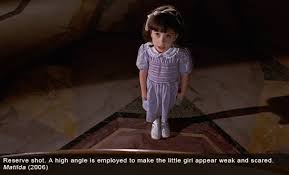
The high angle would be used in parts of the film in which the main character is under the control of her parents. The use of the high angle would show that the main character is inferior in the situation and not in control of her own life; instead she is controlled by her authoritative parents.


I plan to use POV shots during the main characters downward spiral, when she's smoking and taking drugs. I think it'll give it more impact to give the feeling of it being the viewers point of view; maybe feel more relatable.


Close ups gives a closer look into the emotions of the character in frame which is vital to my concept. The girl who is central in my film is a very emotional teenage girl, so I feel that close ups will capture the level of emotion I need to portray the character to the extent I would like.


Music Video Evaluation

I started this unit by researching music video theories (Andrew Goodwin and Carol Vernallis) and analysing 4 music videos of my choice. Th...